
Knowing formal greetings in Spanish can make your first conversation feel smoother and more respectful. Spanish speakers use different expressions depending on the setting, relationship, age, and level of familiarity. Whether you’re meeting a client, teacher, colleague, elder, or stranger, choosing the right greeting helps you create a positive first impression. Simple phrases such as Buenos días, Buenas tardes, and Mucho gusto are useful in many situations. However, understanding when to use usted instead of tú is equally important when you want to communicate politely.
In this guide, you’ll discover common formal Spanish greetings, their English meanings, appropriate responses, and practical examples. You’ll also learn about Spanish greeting etiquette, professional situations, and regional differences. By the end, you’ll feel more confident using respectful Spanish greetings naturally.
What Makes a Greeting Formal in Spanish?
A formal greeting creates respectful social distance without sounding cold. The choice often depends on whether you’re meeting a stranger, elder, professional, authority figure, or business contact. In many situations, usted signals respect, while tú usually signals familiarity.
The Role of Usted in Formal Spanish
The word usted works as the main formal pronoun for one person. It takes third-person singular verb forms, which makes phrases such as ¿Cómo está usted? different from informal ¿Cómo estás?. When you’re unsure, starting formally can prevent an overly familiar first impression.
Greeting 1: Buenos días, señor García. Me alegra mucho conocerle y espero que tenga una excelente mañana.
Greeting 2: Buenas tardes, señora López. Es un placer saludarla después de nuestra previous conversation.
Greeting 3: ¿Cómo está usted? Espero que se encuentre bien y que haya tenido una tranquila jornada.
Greeting 4: Mucho gusto en conocerle. He escuchado excelentes comentarios sobre su trabajo profesional.
Greeting 5: Es un placer conocerla personalmente después de comunicarnos por correo electrónico.
Greeting 6: Hola, señor Martínez. Gracias por recibirnos hoy y por dedicar tiempo a esta meeting.
Greeting 7: ¿Cómo le va? Espero que todo marche perfectamente con su nuevo proyecto profesional.
Greeting 8: Buenas noches, señora Rodríguez. Gracias por acompañarnos during this important formal event tonight.
Greeting 9: Que tenga un buen día y muchas gracias por su atención during our brief conversation.
Greeting 10: Hasta luego, señor Pérez. Ha sido un verdadero placer hablar con usted this afternoon.
Also Read: Good Morning Greetings Images
Common Formal Greetings and Their English Meanings
Some Spanish formal expressions appear everywhere because they are simple, flexible, and socially safe. Time-based greetings are especially useful. Buenos días means “good morning,” buenas tardes means “good afternoon,” and buenas noches means “good evening” or “good night.” Hola can also sound polite when the surrounding language remains formal.
Common Formal Spanish Greetings
For formal Spanish greetings, context matters as much as vocabulary. A phrase like Hola, ¿cómo está? can work in a professional encounter. Meanwhile, Mucho gusto fits naturally when you’re meeting someone for the first time. These expressions form the foundation of polite greetings in Spanish.
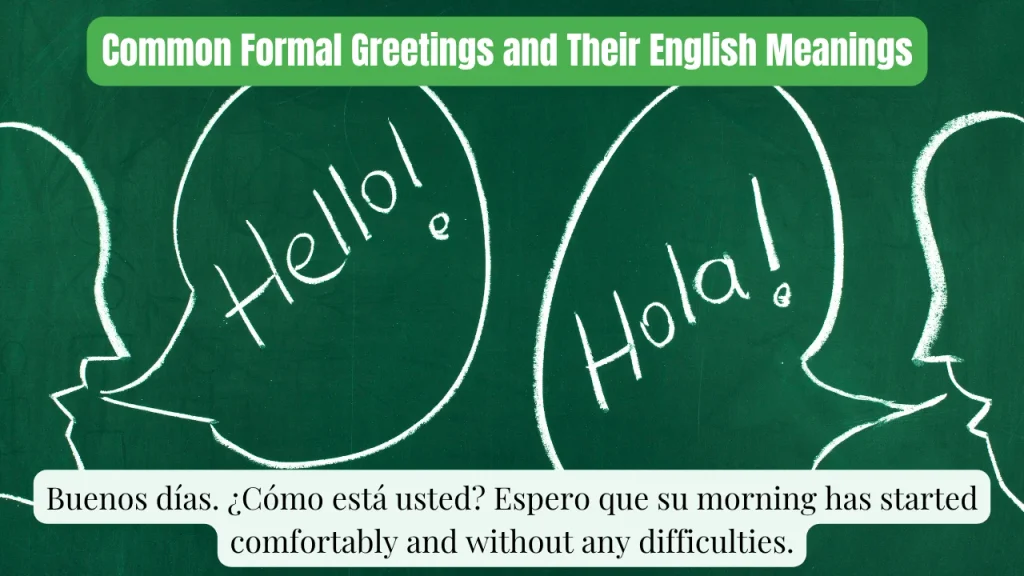
Greeting 1: Buenos días. ¿Cómo está usted? Espero que su morning has started comfortably and without any difficulties.
Greeting 2: Buenas tardes. Es un placer recibirle aquí and discuss the matter with you personally today.
Greeting 3: Buenas noches. Gracias por venir and joining us for this formal evening gathering.
Greeting 4: Hola, ¿cómo está? Me alegra mucho volver a verle después de several months.
Greeting 5: Mucho gusto. Espero que podamos trabajar juntos and develop a productive professional relationship.
Greeting 6: Es un placer conocerle. Gracias por taking the time to meet with our team.
Greeting 7: Encantado de conocerle. He oído cosas muy positivas sobre su experiencia profesional.
Greeting 8: Encantada de conocerla. Espero que podamos hablar con calma about the project this afternoon.
Greeting 9: Gusto en conocerle. Muchas gracias por aceptar nuestra invitación and visiting our office today.
Greeting 10: Gusto en conocerla. Será un placer aprender more about your experience during our conversation.
Also Read: Irish Greetings
Formal Greetings for Friends, Colleagues, and Acquaintances
Formality doesn’t always depend on whether someone is technically a friend. You might know a colleague personally yet still choose formal language during an official meeting. Therefore, Spanish greetings for coworkers can change according to setting, audience, and professional expectations.
Greetings for Colleagues and Acquaintances
With a familiar colleague, you may normally use tú. However, a formal conference, presentation, interview, or meeting can encourage more careful language. In many workplaces, people gradually switch from formal to informal speech after establishing familiarity.
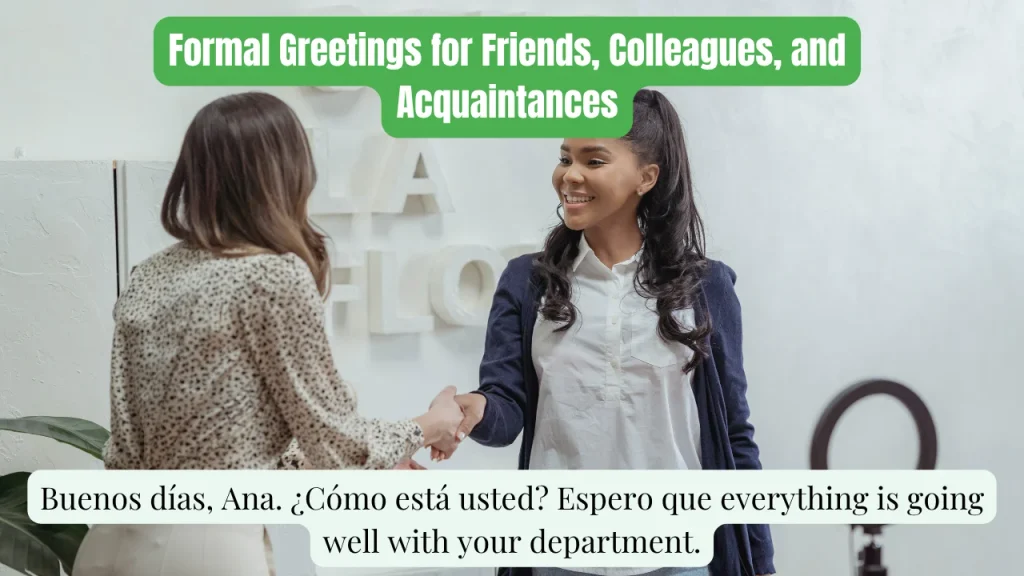
Greeting 1: Buenos días, Ana. ¿Cómo está usted? Espero que everything is going well with your department.
Greeting 2: Buenas tardes, señor Torres. Me alegra coincidir con usted during today’s professional meeting.
Greeting 3: Mucho gusto en conocerle oficialmente. Aunque hemos worked together online, this is our first meeting.
Greeting 4: Es un placer saludarla nuevamente. Espero que su viaje haya sido cómodo and successful.
Greeting 5: ¿Cómo le va? Me alegra saber que el nuevo proyecto continúa avanzando according to schedule.
Greeting 6: Hola, señor Ramírez. Gracias por joining us and sharing your valuable professional experience today.
Greeting 7: Buenos días, señora Fernández. Quería saludarla before we begin today’s important discussion.
Greeting 8: Encantado de volver a verle. Ha pasado bastante tiempo since our previous professional meeting.
Greeting 9: Que tenga un buen día. Espero que podamos continuar esta conversación very soon.
Greeting 10: Hasta pronto, señor García. Gracias por your time and for explaining everything so clearly.
Also Read: Morning Meeting Greetings
Formal Greetings for Addressing Men and Women
Spanish often combines greetings with titles such as señor and señora. These terms resemble “Mr.” and “Mrs./Ms.” in English, although their use depends on context. They can make respectful greetings in Spanish sound warmer and more attentive without becoming excessively ceremonial.
Señor, Señora, and Professional Titles
Use señor for a man and señora for a woman when a respectful form of address feels appropriate. You may also hear professional titles such as doctor or professor. The exact custom varies across countries and institutions, so local usage deserves attention.
Greeting 1: Buenos días, señor López. ¿Cómo está usted this morning, and may I assist you today?
Greeting 2: Buenas tardes, señora Martínez. Es un placer tenerla con nosotros during this important event.
Greeting 3: Hola, señor Rodríguez. Gracias por coming to our office and meeting with the team.
Greeting 4: Buenos días, señora García. Espero que se encuentre muy bien after your recent journey.
Greeting 5: Mucho gusto, señor Hernández. He oído excelentes referencias sobre su professional background and experience.
Greeting 6: Encantada, señora Sánchez. Será un placer conversar con usted about the proposed collaboration.
Greeting 7: Buenas tardes, señor doctor. Gracias por recibirnos and giving us your valuable time.
Greeting 8: Buenos días, señora profesora. Es un placer saludarla before today’s academic discussion begins.
Greeting 9: ¿Cómo está usted, señor Pérez? Me alegra volver a encontrarle at this professional gathering.
Greeting 10: Hasta luego, señora Torres. Muchas gracias por su atención and thoughtful assistance today.
Also Read: Diwali Greetings
Formal vs. Informal Greetings in Spanish
The difference between formal and informal Spanish becomes much clearer when you compare tú and usted directly. Tú generally represents familiarity, while usted can express respect, distance, or courtesy. Yet Spanish-speaking countries don’t all draw that line in exactly the same place.
Tú vs. Usted
In a typical comparison, ¿Cómo estás? uses tú, while ¿Cómo está usted? uses usted. The verb changes because usted takes third-person singular agreement. This distinction is one of the most important foundations of formal vs informal greetings in Spanish.
| English idea | Informal Spanish | Formal Spanish |
| How are you? | ¿Cómo estás? | ¿Cómo está usted? |
| How is everything? | ¿Cómo te va? | ¿Cómo le va? |
| You speak Spanish | Tú hablas español | Usted habla español |
| Nice to meet you | Mucho gusto | Mucho gusto |
| Goodbye | Hasta luego | Hasta luego |
Regional Differences in Formality
Spanish isn’t one single social system. In Spain, tú has become common among people of similar age, while usted remains useful in formal contexts and when addressing older people. Across Latin America, usted may appear more frequently, and some regions use it even within relationships that outsiders might expect to be informal.
Greeting 1: Buenos días, ¿cómo está usted? This respectful form works well when meeting an unfamiliar professional.
Greeting 2: Hola, ¿cómo estás? This informal version suits friends and familiar peers in casual situations.
Greeting 3: Mucho gusto en conocerle. This polite expression works especially well during first formal meetings.
Greeting 4: ¿Cómo está? Espero que todo marche bien with your family and professional responsibilities.
Greeting 5: ¿Cómo estás? Me alegra verte nuevamente after such a long period apart.
Greeting 6: Es un placer conocerle. Espero que nuestra meeting becomes the beginning of successful cooperation.
Greeting 7: ¿Cómo le va? Espero que su trabajo continúe progresando smoothly during this busy season.
Greeting 8: Hola, ¿qué tal? This familiar greeting usually feels more relaxed than a formal professional introduction.
Greeting 9: Buenos días, señor. ¿Podría acompañarme, por favor, so we can begin our scheduled meeting?
Greeting 10: Buenas tardes, profesora. Gracias por recibirnos and answering our questions so patiently today.
Also Read: Christmas Greetings Messages
Spanish Greetings and Appropriate Responses
Knowing a greeting isn’t enough. You also need natural Spanish greetings and responses. A polite exchange often follows a simple pattern: greet the person, ask how they are, respond briefly, and return the question. This rhythm keeps formal Spanish conversation comfortable rather than mechanical.
How to Respond Politely
For example, someone might say ¿Cómo está usted?. A natural answer is Bien, gracias. ¿Y usted?. You can also say Muy bien, gracias. ¿Y usted?. These responses acknowledge the question and politely return it.
Greeting 1: Buenos días. Muy bien, gracias. ¿Y usted? Espero que usted también esté having a pleasant morning.
Greeting 2: Buenas tardes. Bien, gracias. Me alegra saludarle and espero que todo marche bien.
Greeting 3: Mucho gusto. Igualmente. Espero que podamos conversar nuevamente about this important matter soon.
Greeting 4: Es un placer. El gusto es mío. Gracias por making this meeting both productive and enjoyable.
Greeting 5: ¿Cómo está usted? Muy bien, gracias. ¿Y usted? Me alegra saber que todo está bien.
Greeting 6: ¿Cómo le va? Bien, gracias. Espero que su nuevo proyecto continúe progressing successfully this year.
Greeting 7: Gusto en conocerle. Igualmente. Será un placer permanecer in contact after today’s professional discussion.
Greeting 8: Encantada de conocerla. El gusto es mío. Gracias por introducing yourself so warmly this afternoon.
Greeting 9: Buenas noches. Buenas noches. Muchas gracias por venir and spending your evening with our organization.
Greeting 10: Hasta luego. Que tenga un buen día. Thank you very much for your time and attention.
Also Read: Italian Greetings
How to Greet Someone in Different Formal Situations?
The formal way to say hello in Spanish changes slightly according to the setting. A job interview demands more restraint than a hotel reception. A university professor may receive respectful language, while a familiar coworker might prefer a relaxed greeting. Context acts like a social compass.
Professional and Business Situations
Professional greetings in Spanish often combine a time-based greeting with a question or offer of assistance. In business, customer service, and interviews, phrases such as Buenos días, ¿Cómo está?, and Mucho gusto provide a dependable starting point.
Greeting 1: Buenos días, señor. Bienvenido a nuestra oficina; ¿en qué puedo ayudarle this morning?
Greeting 2: Buenas tardes, señora. Es un placer recibirla for today’s scheduled business meeting.
Greeting 3: Mucho gusto. Soy Carlos García, and será un placer trabajar con usted.
Greeting 4: ¿Cómo está usted? Gracias por joining us and making time for this important discussion.
Greeting 5: Buenos días, profesor. Es un placer conocerle and discuss your research interests today.
Greeting 6: Buenas tardes, doctor. Muchas gracias por recibirnos and sharing your professional guidance.
Greeting 7: Hola, señor Martínez. ¿Cómo está? Espero que the journey to our office was comfortable.
Greeting 8: Encantada de conocerle. He preparado several questions about the position we discussed earlier.
Greeting 9: Es un placer saludarla. Gracias por accepting our invitation to this professional event.
Greeting 10: Que tenga un buen día. Ha sido un placer hablar con usted about your requirements.
Formal Greetings for Strangers, Elders, and Professionals
Spanish greetings for strangers often benefit from respectful distance. The same applies to Spanish greetings for elders and Spanish greetings for professionals, especially when you don’t know their preferred register. Starting with usted is often a sensible choice, although local norms can differ.
Greeting 1: Buenos días, señora. Disculpe, ¿podría ayudarme with this information, please?
Greeting 2: Buenas tardes, señor. ¿Podría decirme dónde está the nearest train station?
Greeting 3: ¿Cómo está usted? Es un placer conocerle after hearing about your professional achievements.
Greeting 4: Mucho gusto, señora. Gracias por taking a moment to speak with me today.
Greeting 5: Buenos días, profesor. Espero que se encuentre bien and enjoying your academic work.
Greeting 6: Buenas tardes, doctor. Gracias por recibirnos and answering our questions so carefully.
Greeting 7: Hola, señor. Disculpe la molestia; ¿podría indicarme where the reception desk is located?
Greeting 8: Es un placer conocerla, señora. Espero que disfrute su visita and finds everything comfortable.
Greeting 9: Buenas noches, señor. Gracias por joining us and supporting this formal community event.
Greeting 10: Hasta luego, señora. Ha sido muy amable, and I truly appreciate your assistance today.
Also Read: Spanish Greetings
Physical Greetings in Spanish: Handshakes, Kisses, and Social Etiquette
Words aren’t the entire story. Spanish greeting etiquette also includes handshakes, cheek kisses, eye contact, personal space, and body language. Physical customs differ across countries and situations. A handshake remains a sensible choice in many formal or business settings, while cheek-kissing belongs more often to familiar social encounters.
Handshakes and Cheek-Kiss Customs
The famous Spanish greeting kiss shouldn’t become a rigid rule. In Spain, cheek-kiss greetings can occur socially, while business encounters commonly use a handshake. Across Latin America, practices vary considerably. When uncertain, follow the other person’s lead and observe the local social etiquette.
Greeting 1: Buenos días, señor. A respectful handshake can accompany this greeting during a formal business introduction.
Greeting 2: Mucho gusto. Extend your hand naturally when meeting a professional for the first time.
Greeting 3: Buenas tardes, señora. A warm smile and polite greeting can be more appropriate than assuming physical contact.
Greeting 4: Es un placer conocerle. Follow the other person’s greeting style rather than forcing unfamiliar physical customs.
Greeting 5: Hola, ¿cómo está? Maintain comfortable eye contact while offering a courteous handshake in professional settings.
Greeting 6: Encantada de conocerla. If she offers a cheek kiss socially, respond naturally without making assumptions.
Greeting 7: Buenas noches. In a formal event, a handshake usually provides a straightforward and respectful greeting.
Greeting 8: Mucho gusto. A friendly smile can communicate warmth when you aren’t certain about local greeting customs.
Greeting 9: ¿Cómo está usted? Observe the person’s body language before choosing a handshake or another greeting.
Greeting 10: Hasta luego. A polite farewell and gentle handshake can close a professional conversation comfortably.
Also Read: Arabic Greetings
Common Mistakes to Avoid When Using Formal Spanish Greetings
Even simple Spanish formal greetings can become awkward when you mix registers or translate expressions too literally. The biggest mistake isn’t using a slightly unusual phrase. It’s ignoring the social relationship. Pay attention to context, listen carefully, and adapt when the other person changes register.
Avoiding Common Register Problems
One common error involves mixing tú with an usted verb. For example, “¿Usted eres…?” incorrectly combines two systems. The correct forms are “¿Usted es…?” or “¿Tú eres…?”. Also, remember that regional conventions can alter expectations.
Greeting 1: Buenos días, ¿cómo está usted? Keep the pronoun and verb agreement consistent throughout the formal exchange.
Greeting 2: Mucho gusto en conocerle. Don’t suddenly switch to highly casual language without social reason.
Greeting 3: Buenas tardes, señora. Avoid translating an English greeting word for word when Spanish offers a natural expression.
Greeting 4: ¿Cómo está usted? Respond with Bien, gracias. ¿Y usted? rather than giving an unnecessarily elaborate answer.
Greeting 5: Es un placer conocerle. Remember that formal speech should remain warm instead of sounding robotic or distant.
Greeting 6: Buenos días, señor. Don’t use slang when a professional setting clearly requires respectful language.
Greeting 7: Buenas noches, señora. Choose the time-based greeting according to the local time and situation.
Greeting 8: Mucho gusto. Don’t assume that one physical greeting custom applies throughout every Spanish-speaking country.
Greeting 9: ¿Cómo le va? Remember that formal grammar and polite vocabulary should work together naturally.
Greeting 10: Hasta luego, señor. Close the conversation politely instead of abruptly ending the exchange.
Formal Spanish Greetings: Quick Reference Guide
Once you understand the main patterns, how to greet someone formally in Spanish becomes much easier. Start with the time of day, add a respectful question or introduction, and use usted when appropriate. Then observe how the other person speaks. Social cues often provide the final answer.
| Spanish expression | English meaning | Typical use |
| Buenos días | Good morning | Morning, professional or general |
| Buenas tardes | Good afternoon | Afternoon, formal or general |
| Buenas noches | Good evening/night | Evening or nighttime |
| Hola | Hello | Flexible, depends on context |
| ¿Cómo está usted? | How are you? | Formal |
| ¿Cómo está? | How are you? | Polite and formal |
| ¿Cómo le va? | How is it going? | Polite |
| Mucho gusto | Nice to meet you | Introductions |
| Es un placer | It’s a pleasure | Formal introductions |
| Gusto en conocerle | Nice to meet you | Formal, often addressing a man |
| Gusto en conocerla | Nice to meet you | Formal, addressing a woman |
| El gusto es mío | The pleasure is mine | Response |
| Igualmente | Likewise | Response |
| Hasta luego | See you later | Polite farewell |
| Que tenga un buen día | Have a good day | Polite farewell |
How to Form a Natural Formal Greeting
A useful formula is simple: greeting + respectful question + introduction or purpose. For example, “Buenos días. ¿Cómo está usted? Mucho gusto en conocerle.” sounds natural without becoming excessively ceremonial. This pattern works well for learners because it combines several polite Spanish phrases in one practical exchange.
Greeting 1: **Buenos días. ¿Cómo está usted? Mucho gusto en conocerle and thank you for meeting with me today.
Greeting 2: Buenas tardes. Es un placer conocerla and discuss this important project with you personally.
Greeting 3: Hola. ¿Cómo está? Espero que se encuentre bien and ready for our scheduled conversation today.
Greeting 4: Mucho gusto. Soy Ana López. Será un placer trabajar con usted during this professional assignment.
Greeting 5: Buenos días, señor García. ¿Cómo le va? Gracias por receiving me at your office today.
Greeting 6: Buenas tardes, señora Díaz. Encantada de conocerla and grateful for this opportunity to speak.
Greeting 7: Es un placer saludarle. Espero que nuestra conversación resulte useful and productive for everyone involved.
Greeting 8: Gusto en conocerle. ¿Cómo está usted? Me alegra finally meeting you after our online correspondence.
Greeting 9: Buenas noches. Gracias por acompañarnos; esperamos que disfrute the evening and feels welcome here.
Greeting 10: Hasta luego. Que tenga un buen día and thank you sincerely for your valuable assistance.
FAQs
What are formal greetings in Spanish to a friend?
Formal greetings in Spanish to a friend can include Buenos días, ¿Cómo está usted?, or Mucho gusto, especially in professional or respectful settings.
How do you use formal greetings in Spanish to a girl?
You can politely say Buenos días, señora/señorita or ¿Cómo está usted?, depending on her age, context, and your relationship.
What are common informal greetings in Spanish?
Common informal greetings include Hola, ¿Cómo estás?, ¿Qué tal?, and Buenos días, which can also sound friendly depending on the situation.
What are common Spanish greetings and responses?
Common Spanish greetings and responses include “¿Cómo está usted?” with “Bien, gracias. ¿Y usted?” and “Mucho gusto” with “Igualmente.”
What are the differences between formal and informal greetings in Spanish?
Formal greetings usually use usted and polite language, while informal greetings commonly use tú with friends, family members, and familiar people.
Also Read: Seasons Greetings
Conclusion
Understanding formal greetings in Spanish makes it easier to communicate with confidence and respect. Expressions such as Buenos días, Buenas tardes, Mucho gusto, and ¿Cómo está usted? can help you begin conversations naturally in professional or unfamiliar settings. The right greeting depends on the person, relationship, time of day, and cultural context. Learning when to use usted instead of tú is especially useful when you want to maintain respectful distance.
Ultimately, good Spanish greeting etiquette goes beyond memorizing phrases. You should also notice how people around you communicate and adapt to the situation. Whether you’re meeting a client, professor, elder, colleague, or stranger, polite language and a warm attitude make a strong impression. With regular practice, these professional greetings in Spanish will soon feel natural and effortless.

Sophia Miller is a versatile writer who explores lifestyle, technology, business, health, and education topics. She is passionate about delivering clear, engaging, and informative content that helps readers stay informed and inspired.
1 thought on “Formal Greetings in Spanish: Polite Spanish Greetings for Every Situation”