
Introduction
A warm classroom can begin with just a few friendly words. Morning meeting greetings give students a simple way to connect, smile, and prepare for the school day ahead. Whether you teach kindergarten or elementary students, a thoughtful morning greeting can create a welcoming atmosphere before lessons begin. These greetings can include names, waves, songs, partner activities, movements, or cheerful words. They don’t need complicated preparation or expensive materials. In fact, the best greeting activities often take only a few minutes.
With the right approach, teachers can build a stronger classroom community, encourage communication, and help children feel valued. In this guide, you’ll discover practical ideas for making every morning meeting more friendly and engaging.
What Are Morning Meeting Greetings?
A great school morning begins with connection, not worksheets. Morning meeting greetings are short, purposeful ways for a teacher and classmates to welcome one another before learning begins. A greeting may involve names, words, movement, songs, gestures, or partner interaction. Responsive Classroom describes Morning Meeting as a deliberate classroom gathering built around greeting, sharing, group activity, and a morning message.
Understanding Morning Meeting Greetings
The goal goes beyond saying good morning. A thoughtful morning greeting helps children recognize one another and enter the room with a sense of belonging. For example, a teacher might say a student’s name before inviting the class to wave. That tiny moment can create warmth without taking much time.
These classroom greetings also become part of the classroom routine. When students know what happens next, the start of the school day feels calmer. Teachers can rotate greeting styles throughout the week while keeping the overall structure familiar.
Ten Welcoming Greeting Examples
| # | Greeting |
| 1 | Good morning, Maya! We’re happy you’re here, and we hope your day starts wonderfully. |
| 2 | Good morning, friends! Let’s greet each other warmly before we begin today’s learning adventure. |
| 3 | Welcome, everyone! Look around, smile at a classmate, and share a cheerful morning greeting. |
| 4 | Good morning, classmates! Your ideas, kindness, and energy help make our classroom special. |
| 5 | Hello, everyone! Take a deep breath, smile gently, and get ready for another exciting school day. |
| 6 | Good morning, learners! Let’s welcome each person by name and make everyone feel valued today. |
| 7 | Hello, friends! We’re together again, and there’s plenty of room for kindness this morning. |
| 8 | Good morning, team! Let’s begin with friendly voices, listening ears, and welcoming smiles. |
| 9 | Welcome to our morning meeting! Let’s greet one another and start this day with positive energy. |
| 10 | Good morning, everyone! Your presence matters here, and we’re glad you joined our classroom community. |
Also Read: Diwali Greetings
Why Morning Greetings Matter in a Meeting?
The first few minutes can shape the atmosphere that follows. Morning meeting greetings give students a predictable opportunity to connect with their teacher and classmates. Research-informed classroom approaches describe greetings as a way to support recognition, belonging, communication, and positive relationships.
Building a Welcoming Classroom Community
A welcoming classroom doesn’t happen by accident. Students need repeated experiences that show their presence matters. When children greet each other, they practice simple social habits while learning that everyone belongs.
This is especially useful for classroom community building at the beginning of a school year. A consistent greeting can also help children cross ordinary friendship groups. Instead of talking only with familiar classmates, students gradually interact with a wider circle.
Supporting Social-Emotional Learning
Greetings can quietly support social emotional learning because students practice listening, responding, waiting, and noticing others. Responsive Classroom also connects Morning Meeting with skills such as respectful listening, cooperation, self-control, and empathy.
For younger children, these moments can become informal SEL activities. A teacher might model eye contact, personal space, and respectful language before students practice the same behaviors. The greeting then becomes a small lesson with a real social purpose.
Ten Positive Greeting Examples
| # | Greeting |
| 1 | Good morning, everyone! Let’s make space for kindness and help every classmate feel welcome today. |
| 2 | Hello, friends! When we greet someone warmly, we show that their presence matters to us. |
| 3 | Good morning, team! Let’s listen carefully, speak kindly, and notice the people around us. |
| 4 | Welcome, classmates! Today is another chance to learn together, help others, and build confidence. |
| 5 | Good morning! Let’s begin by sharing smiles and making our classroom feel safe and friendly. |
| 6 | Hello, learners! Remember that every voice matters, including the quiet voices in our classroom. |
| 7 | Good morning, friends! Let’s welcome each person with patience, respect, and genuine kindness today. |
| 8 | Hello, team! Our classroom grows stronger whenever we listen carefully and include one another. |
| 9 | Good morning, everyone! Let’s begin with positive interactions that help us learn and cooperate. |
| 10 | Welcome, students! Let’s create a peaceful beginning where everyone feels noticed, respected, and valued. |
Also Read: Christmas Greetings Messages
Fun and Friendly Morning Greetings for Students
Who says a classroom greeting must feel formal? Fun morning meeting greetings for students can add laughter and movement without turning the routine into chaos. Children often respond well when the greeting has a tiny surprise.
Playful Morning Greetings Students Can Try
Teachers can use silly greetings, funny voices, gestures, or themed expressions. A wave might become a royal wave. A simple hello might become a robot greeting. These small changes keep familiar routines fresh.
For older elementary students, teachers can offer choices. One child might choose a wave while another selects a fist bump. The key is voluntary participation and respectful boundaries.
Movement-Based Greeting Ideas
Movement greetings work particularly well when students arrive with restless energy. A class might greet through a gentle stretch, synchronized clap, dance move, or simple gesture. Responsive Classroom resources also describe movement, singing, clapping, and handshakes among possible greeting formats.
These greeting activities should remain brief. The purpose isn’t to stage a performance. Instead, movement creates a lively bridge between arrival and focused learning.
Ten Fun Greeting Examples
| # | Greeting |
| 1 | Good morning! Give your classmate a giant imaginary wave from across the room. |
| 2 | Hello, friends! Greet someone today using your best robot voice and a cheerful smile. |
| 3 | Good morning, team! Choose a wave, fist bump, or friendly gesture to greet your partner. |
| 4 | Hello, classmates! Let’s create one simple dance move and use it as today’s greeting. |
| 5 | Good morning, everyone! Give your neighbor a superhero greeting before sitting ready for learning. |
| 6 | Hello, friends! Pretend your greeting travels like sunshine until it reaches every person here. |
| 7 | Good morning! Choose a silly face, gentle wave, or cheerful voice for your greeting today. |
| 8 | Hello, learners! Clap twice, smile brightly, and greet the person sitting beside you. |
| 9 | Good morning, team! Send a friendly wave around our circle without rushing anyone. |
| 10 | Hello, everyone! Invent a tiny greeting gesture that makes your partner smile without feeling uncomfortable. |
Also Read: Italian Greetings
Morning Meeting Greetings for Kindergarten and Young Children
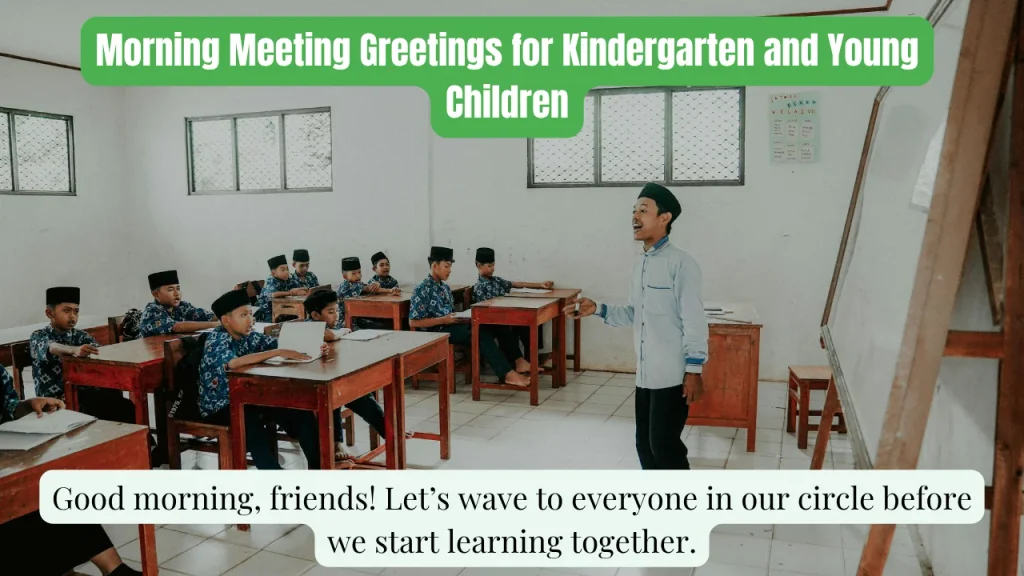
Young children need simplicity before novelty. Morning meeting greetings for kindergarten should use familiar words, clear directions, and short turns. A predictable pattern helps young learners understand what to do without becoming overwhelmed.
Simple Greetings for Kindergarten
For kindergarten students, a teacher might begin with names and gestures. “Good morning, Sam,” followed by a wave, is enough. Preschool children can use similar preschool greetings with extra modeling.
Teachers should avoid complicated rules at first. Once children understand the routine, add songs, movements, partner greetings, or simple choices.
Circle Time and Whole-Group Greetings
During circle time, children can sit where they can see one another. A teacher may greet one child at a time while the group responds together. This creates a gentle rhythm and reinforces listening.
Whole-group greetings can also support children who aren’t ready for individual speaking. A wave, clap, or group response allows participation without demanding public performance.
Ten Kindergarten Greeting Examples
| # | Greeting |
| 1 | Good morning, friends! Let’s wave to everyone in our circle before we start learning together. |
| 2 | Hello, kindergarten friends! Say good morning to the person sitting beside you with a smile. |
| 3 | Good morning, little learners! Let’s clap softly and welcome everyone into our classroom today. |
| 4 | Hello, friends! Point gently toward a classmate and send them a cheerful morning wave. |
| 5 | Good morning! Let’s say each student’s name while sharing one friendly classroom gesture. |
| 6 | Hello, everyone! Touch your heart, smile, and say good morning to our whole group. |
| 7 | Good morning, friends! Let’s pass one gentle wave around our circle until everyone participates. |
| 8 | Hello, learners! Choose a wave or smile to welcome your partner before our activities begin. |
| 9 | Good morning, class! Let’s use quiet voices and friendly faces as we greet our classmates. |
| 10 | Hello, kindergarten friends! We’re together again, and today we can learn, laugh, and help each other. |
Also Read: Spanish Greetings
Creative and Interactive Greetings for Classroom Meetings
Once students understand the basics, creativity can take the routine further. Interactive morning meeting greetings can include songs, partner exchanges, rhythm, movement, or simple classroom challenges.
Partner and Small-Group Greeting Activities
Partner greetings give students a chance to interact directly. One student can greet first while the other responds. Then they can switch roles.
For morning meeting greetings for elementary students, partner formats also offer useful variety. Teachers can change partners regularly, which creates more opportunities for classroom connection without making the activity complicated.
Greeting Games, Songs, and Chants
Greeting games can combine names with memory or movement. For example, one student says a classmate’s name while adding a clap. The next student repeats the pattern and adds another name.
Greeting songs and greeting chants can work especially well with younger children. Call-and-response formats create a predictable rhythm while keeping everyone involved.
Ten Interactive Greeting Examples
| # | Greeting |
| 1 | Good morning, partner! Say your classmate’s name, smile, and invite them to return the greeting. |
| 2 | Hello, friends! Clap twice while greeting someone, then let that person choose the next classmate. |
| 3 | Good morning, team! Start our call and response by saying, “Good morning,” and let everyone answer. |
| 4 | Hello, classmates! Pass the greeting around our circle while remembering each person’s name carefully. |
| 5 | Good morning! Greet your partner with a rhythm, then let them create the next rhythm. |
| 6 | Hello, learners! Choose a classmate, say their name, and offer a friendly gesture they can copy. |
| 7 | Good morning, everyone! Let’s build a greeting chant where each person adds one cheerful word. |
| 8 | Hello, team! Toss an imaginary ball across the circle while greeting the person receiving it. |
| 9 | Good morning, friends! Sing one short greeting together before inviting partners to respond. |
| 10 | Hello, classmates! Create a quiet greeting movement that everyone can copy around the circle. |
Also Read: Arabic Greetings
Seasonal Morning Greetings for Spring and Special Occasions
A seasonal theme can give an ordinary routine fresh color. Creative greeting ideas might connect with spring weather, flowers, animals, school celebrations, or classroom milestones. Seasonal changes also prevent routines from becoming predictable.
Spring Morning Meeting Greetings
Spring offers plenty of gentle inspiration. Students can greet one another like butterflies, flowers opening, birds singing, or sunshine appearing after rain. These ideas work particularly well for younger children.
Teachers can also connect spring morning greetings with vocabulary. Words such as bloom, breeze, garden, and rainbow can turn a greeting into a tiny language activity.
Special Events and Inclusive Celebrations
Special occasions deserve thoughtful planning. A greeting can acknowledge a birthday, classroom achievement, school event, or seasonal theme without excluding students who celebrate differently.
For example, a teacher can use a broad “celebration greeting” rather than assuming every child observes the same holiday. That approach keeps the welcoming classroom inclusive.
Ten Seasonal Greeting Examples
| # | Greeting |
| 1 | Good morning, spring learners! Let’s greet each other like flowers opening toward the morning sunshine. |
| 2 | Hello, friends! Imagine a warm spring breeze carrying your cheerful greeting across our classroom. |
| 3 | Good morning, everyone! Let’s use butterfly movements while welcoming our classmates into today’s meeting. |
| 4 | Hello, team! Share a bright spring greeting that reminds someone today can be full of possibilities. |
| 5 | Good morning! Let’s greet our partners like cheerful birds beginning a beautiful new morning. |
| 6 | Hello, friends! Choose a flower-inspired gesture and use it to welcome someone nearby. |
| 7 | Good morning, classmates! Let’s send sunshine around our circle through smiles, waves, and kind words. |
| 8 | Hello, learners! Pretend your greeting is a spring seed growing into something kind today. |
| 9 | Good morning, team! Let’s celebrate a fresh start by greeting each person with warmth. |
| 10 | Hello, everyone! May our classroom bloom today through curiosity, cooperation, laughter, and kindness. |
Also Read: Seasons Greetings
Short and Simple Morning Meeting Greetings
Busy mornings need efficient routines. Simple morning meeting greetings can still feel meaningful when teachers deliver them warmly. A greeting doesn’t need elaborate materials or several minutes of preparation.
Quick Greetings for Busy School Mornings
Quick morning meeting greetings work well when attendance, announcements, or schedule changes reduce available time. A teacher can use names, gestures, or one shared response.
The important point is consistency. Even a 30-second greeting can create a clear transition into the morning routine.
Positive Greetings for Students
Short phrases can reinforce confidence without sounding forced. Teachers might welcome students, recognize effort, or invite everyone into the day’s learning.
These positive morning greetings for students can also support a positive classroom environment. The language should sound genuine rather than overly cheerful.
Ten Short Greeting Examples
| # | Greeting |
| 1 | Good morning, everyone! I’m glad you’re here and ready to begin another day together. |
| 2 | Hello, friends! Let’s start today with kind words, calm minds, and curious questions. |
| 3 | Good morning, team! Take one breath, smile, and get ready for today’s learning. |
| 4 | Welcome, students! Your ideas matter, and we’re ready to hear them today. |
| 5 | Good morning, classmates! Let’s make today respectful, productive, and enjoyable for everyone. |
| 6 | Hello, learners! We’re here together, and that makes our classroom stronger. |
| 7 | Good morning! Let’s greet our neighbors and prepare for a wonderful beginning. |
| 8 | Hello, team! Bring your curiosity, kindness, and best effort into today’s classroom. |
| 9 | Good morning, friends! Let’s begin calmly and help one another succeed today. |
| 10 | Welcome, everyone! Take your place, greet a classmate, and let’s begin our day. |
Also Read: Friday Greetings
Free Morning Greeting Ideas and Printable Resources
Not every teacher needs expensive materials. Free morning greeting ideas can come from student suggestions, reusable cards, classroom charts, or simple prompts written on the board. Responsive Classroom also provides free Morning Meeting resources and sample activities.
Printable Morning Meeting Greeting Cards
Printable cards can make planning easier. Teachers can create categories for movement, partner greetings, names, seasons, and songs. Then they can select one card each morning.
A small card system also makes the morning meeting routine easier for substitutes or new teachers. The format becomes visible instead of living only inside the teacher’s head.
Creating a DIY Greeting Collection
You can build a useful collection with ordinary classroom supplies. Write one greeting on each card and store them in labeled envelopes. Students can eventually help create new cards.
This approach encourages ownership. It also produces no prep morning meeting greetings once the initial collection exists.
Ten Free Greeting Examples
| # | Greeting |
| 1 | Good morning, friends! Choose one classmate and give them a warm greeting using only your voice. |
| 2 | Hello, everyone! Write one kind greeting on the board and invite classmates to read it together. |
| 3 | Good morning, team! Pick a classroom object and invent a cheerful greeting inspired by it. |
| 4 | Hello, learners! Choose a partner and create a simple greeting that costs nothing to prepare. |
| 5 | Good morning! Let’s use our names to create a free classroom greeting chain today. |
| 6 | Hello, classmates! Choose a gesture from our greeting chart and share it with your partner. |
| 7 | Good morning, everyone! Let’s create a new greeting together using words already familiar to us. |
| 8 | Hello, friends! Write a positive word on the board and use it during today’s greeting. |
| 9 | Good morning, team! Choose yesterday’s favorite greeting and repeat it with a fresh twist. |
| 10 | Welcome, students! Let’s build our own greeting collection and add one new idea each week. |
How to Make Morning Meetings More Engaging with Greetings?
The strongest morning meeting greetings aren’t necessarily the loudest or most elaborate. They work because they fit the students, the classroom, and the moment. Responsive Classroom recommends keeping Morning Meeting focused and purposeful while using greetings to build connection and belonging.
Create a Predictable Yet Flexible Routine
Children benefit from knowing what comes next. A predictable morning meeting structure can therefore reduce uncertainty while still leaving room for creativity.
For instance, Monday could feature a partner greeting. Tuesday might use movement. Wednesday could bring a song. The framework stays familiar while the experience changes.
Give Students Meaningful Choices
Choice can increase student engagement because children gain some ownership over the activity. Instead of selecting every greeting yourself, invite students to suggest suitable ideas.
However, choices should remain manageable. Two or three options usually work better than an enormous menu, especially for younger children.
Match Greetings to Age and Classroom Needs
A greeting suitable for first grade may not suit preschoolers. Older students may enjoy wordplay, challenges, or student-led formats. Younger children usually need clearer modeling and shorter turns.
Teachers should also consider sensory preferences, mobility, language development, and comfort with physical contact. A wave can always replace a handshake or high five.
Keep Greetings Inclusive and Respectful
Not every student wants physical contact. Some children may also need additional time to speak or process a direction. Offering verbal greetings, eye contact, waves, or gestures gives everyone a reasonable way to participate.
That flexibility supports positive interactions without turning participation into a test. The goal remains connection, not performance.
Build a Greeting Routine That Lasts All Year
A useful greeting routine should evolve. Teachers can observe which greeting activities create genuine participation and which ones cause confusion or unnecessary noise.
| Classroom Need | Useful Greeting Style |
| Quiet start | Wave or spoken greeting |
| High energy | Movement greeting |
| Name practice | Circle or name game |
| Partner interaction | Partner greeting |
| Kindergarten | Song or gesture |
| Limited time | Quick whole-group greeting |
| Seasonal theme | Themed greeting |
| Inclusive participation | Choice-based greeting |
Ten Engaging Greeting Examples
| # | Greeting |
| 1 | Good morning, team! Choose the greeting that helps you feel comfortable and ready to participate today. |
| 2 | Hello, friends! Let’s welcome everyone while remembering that different people prefer different ways to greet. |
| 3 | Good morning! Choose a partner, share your name, and offer one respectful greeting option. |
| 4 | Hello, learners! Let’s begin with a greeting that connects naturally to something we’re learning today. |
| 5 | Good morning, classmates! Today’s greeting is student-led, so one volunteer can demonstrate first. |
| 6 | Hello, team! Let’s use yesterday’s greeting differently and see how creative our classroom can become. |
| 7 | Good morning, everyone! Choose a quiet greeting if you need a calm beginning today. |
| 8 | Hello, friends! Let’s greet one another by name and listen carefully for every response. |
| 9 | Good morning, learners! Our greeting today should help everyone feel included, comfortable, and ready. |
| 10 | Welcome, class! Let’s begin with one friendly greeting before moving into our next classroom activity. |
FAQs
What is a good greeting to start a meeting?
A warm “Good morning, everyone! I’m glad you’re here and excited to begin our day together” creates a welcoming start.
How to say good morning in a fun way?
Try playful wording such as, “Rise and shine, team! Let’s bring our best energy and smiles into today’s meeting.”
What are some uplifting good morning messages?
“Good morning! Today is a fresh opportunity to learn, grow, help others, and accomplish something meaningful together.”
What are some creative morning greetings?
Use creative greetings such as themed voices, gestures, songs, partner exchanges, or playful phrases that encourage students to participate.
What are some catchy phrases to say “good morning”?
Try phrases like “Good morning, bright minds!” “Rise and shine, superstars!” or “Hello, learning champions! Let’s make today count.”
What to say instead of “have a good morning”?
You can say, “Wishing you a wonderful start,” “Enjoy your morning,” or “I hope your day begins with something great.”
How to say good morning without being boring?
Add a student’s name, movement, question, rhyme, or unexpected phrase to make an ordinary morning greeting feel fresh and engaging.
Also Read: Sunday Greetings
Conclusion
Morning meeting greetings can turn the first few minutes of class into a warm and meaningful experience. A simple “good morning” can help students feel noticed, respected, and ready to learn. Whether you choose classroom greetings, movement activities, partner exchanges, songs, or quick verbal welcomes, the goal remains the same: create connection. Teachers can adapt these greeting activities for kindergarten, elementary students, and different classroom needs.
With consistent practice, greetings can strengthen the classroom community, encourage positive interactions, and support social emotional learning. Most importantly, a thoughtful greeting helps every child feel welcome. Start with one simple idea, make it enjoyable, and build your routine from there.

Sophia Miller is a versatile writer who explores lifestyle, technology, business, health, and education topics. She is passionate about delivering clear, engaging, and informative content that helps readers stay informed and inspired.