
Introduction
A simple hello can reveal a lot about a country’s language and culture. Irish greetings blend traditional Gaeilge, warm hospitality, playful humor, and modern Irish English. From Dia dhuit to friendly expressions such as “What’s the craic?”, these phrases can make everyday conversations feel more welcoming and lively. Some greetings sound formal and traditional, while others fit naturally among friends and family. Understanding their meanings also helps you use them with confidence rather than simply repeating unfamiliar words.
Whether you’re learning Irish for travel, exploring Irish language greetings, or searching for charming phrases to share with friends, there’s plenty to discover. This guide explores traditional Irish greetings, casual expressions, morning wishes, good-luck phrases, and memorable farewells.
Traditional Irish Greetings and Their Meanings
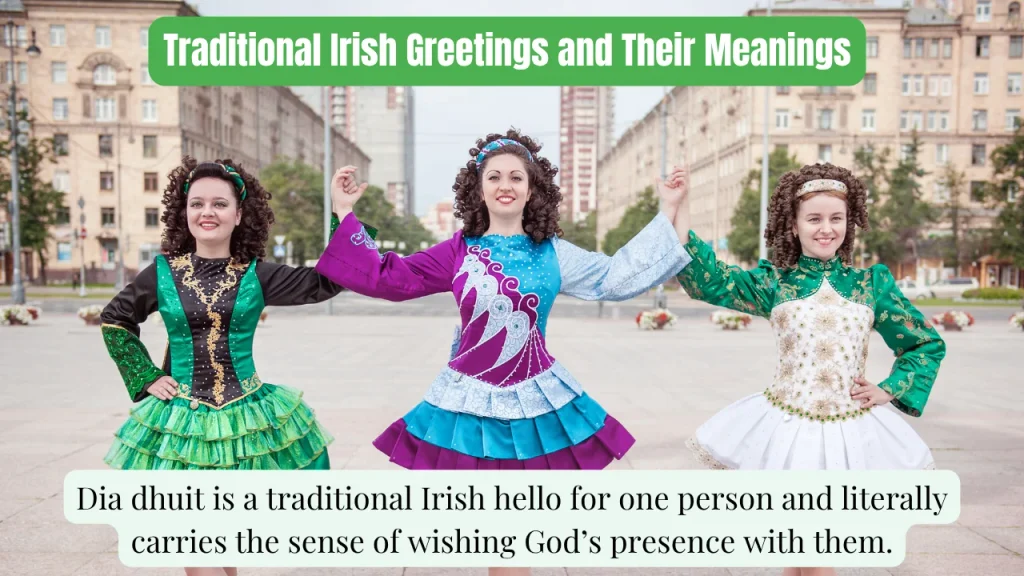
Traditional Irish greetings often feel more meaningful than a simple “hello.” The Irish language has several ways to welcome someone, ask about their well-being, or show warmth. The most recognizable Irish Gaelic greetings include phrases used in schools, homes, communities, and everyday conversation. For accurate language resources, Foras na Gaeilge’s Foclóir provides an established Irish-English dictionary.
- Dia dhuit is a traditional Irish hello for one person and literally carries the sense of wishing God’s presence with them.
- Dia dhaoibh addresses several people, making it useful when you want respectful Irish language greetings for a group.
- Dia is Muire duit is traditionally used as a response to Dia dhuit, adding a distinctly Catholic cultural reference.
- Conas atá tú means “How are you?” and provides a natural way to move from greeting into friendly conversation.
- Cén chaoi a bhfuil tú is another regional form of asking how someone is doing during an ordinary Irish conversation.
- Fáilte means welcome and can create a warm opening when receiving visitors, guests, or newcomers into your home.
- Céad míle fáilte means “a hundred thousand welcomes” and expresses an especially generous sense of hospitality.
- Irish pronunciation deserves attention because spelling and sound can differ considerably from familiar English pronunciation.
- Irish greeting meaning becomes clearer when you understand that many phrases carry wishes for safety, blessing, or well-being.
- Irish greeting translation should therefore explain context as well as literal meaning, especially when a phrase has cultural depth.
How to Use Traditional Irish Greetings Naturally?
Traditional greetings in Irish Gaelic work best when you know whom you’re addressing. Some expressions suit one person while others address groups. Regional Irish varieties can also influence wording, pronunciation, and preferred expressions. For example, Conas atá tú? is associated with asking “How are you?” while other regional forms exist.
Also Read: Morning Meeting Greetings
Short and Simple Irish Greetings
Short expressions make excellent starting points for learners. These common Irish greetings are easy to remember and can help you begin conversations without sounding overly formal. The important thing is to use each expression in the right setting rather than memorizing words without understanding their purpose.
- Dia dhuit gives beginners a classic starting point because it provides a recognizable and traditional way to greet one person.
- Fáilte offers a concise welcome when you want to greet visitors with genuine warmth and traditional Irish hospitality.
- Slán works as a simple Irish goodbye and remains one of the easiest Irish words for learners.
- Slán leat gives a slightly fuller farewell and is commonly associated with saying goodbye to someone who is leaving.
- Slán go fóill means goodbye for now and suits situations where you expect to meet that person again.
- Slán abhaile carries the friendly sense of wishing someone a safe journey home after visiting you.
- Maith thú can express approval or encouragement and may fit naturally after someone has done something well.
- Sláinte is strongly associated with good health and is commonly heard as a toast during social gatherings.
- good morning in Irish can be expressed with traditional morning wording, giving your greeting a distinctly local character.
- hello in Irish is often searched by beginners who want one dependable phrase before exploring longer conversational expressions.
A Simple Way to Remember Irish Phrases
Start with one greeting, one question, and one farewell. For example, learn Dia dhuit, Conas atá tú, and Slán first. These Irish phrases give you a practical foundation. Once they feel comfortable, add more regional or informal expressions.
Also Read: Diwali Greetings
Irish Greetings for Friends and Family
Warmth matters greatly when you greet people you already know. Irish greetings for friends often sound relaxed, humorous, and conversational. With family, the wording may become even more affectionate. Instead of searching for one perfect phrase, think about the relationship, setting, and tone you want to create.
- Conas atá tú makes a friendly opening because it combines a greeting with genuine interest in another person’s well-being.
- Cén chaoi a bhfuil tú can sound natural when you want to ask a familiar person how life has been treating them.
- Dia dhuit, a chara creates a warm greeting when speaking affectionately to someone you consider a close friend.
- Fáilte abhaile can welcome someone home with a warmer feeling than an ordinary everyday greeting.
- Slán leat, a chara adds personal warmth when saying goodbye to a friend after spending time together.
- Howya is an informal Irish English greeting that works naturally in relaxed conversations between familiar people.
- How’s things offers another casual opening when you want to ask about someone’s life without sounding formal.
- Well? can function as a brief greeting in informal Irish conversation and often invites the other person to respond.
- Alright? can work as a quick casual greeting, especially among people who already know each other.
- Irish greetings for family can combine ordinary affection with local expressions, making reunions and visits feel more personal.
Irish Greetings for Different Family Occasions
Family gatherings create opportunities for warmer friendly Irish phrases. You might use a traditional greeting when meeting an older relative while choosing casual English slang with siblings or cousins. The relationship matters more than choosing the most elaborate phrase. A natural greeting always beats a complicated one delivered awkwardly.
Also Read: Christmas Greetings Messages
Funny and Playful Irish Greetings
Humor gives many Irish greetings their personality. Irish conversation often values wit, teasing, and easy banter. However, funny expressions work best with people who understand the tone. A playful phrase can sound charming among friends but confusing in a formal setting.
- What’s the craic asks what is happening or how things are going while inviting a lively and social response.
- How’s the craic carries the same informal spirit and works particularly well among friends who enjoy relaxed conversation.
- What’s the story is a playful conversational opener that can simply mean “What’s happening?” in informal Irish English.
- Story? creates an extremely brief greeting that relies on context, familiarity, and the relaxed rhythm of Irish conversation.
- How’s she cuttin’ is an informal expression associated with asking how things are going in a humorous conversational style.
- How’s the form can playfully ask how someone is doing while keeping the exchange light and informal.
- Well? can sound humorous when delivered with the right tone, especially between people accustomed to local conversational habits.
- Howya keeps things short and friendly while giving a conversation an unmistakably casual Irish flavor.
- Alright? can become playful when friends use it as a quick greeting rather than a serious question about well-being.
- funny Irish phrases work best when you understand the relationship, timing, and social setting before using them.
Why Irish Humor Appears in Greetings?
The word craic is especially revealing. Cambridge Dictionary identifies it as Irish English and defines it around enjoyable social time and entertaining conversation. Therefore, What’s the craic isn’t merely a literal question. It opens the door to conversation, stories, jokes, and shared enjoyment.
Also Read: Italian Greetings
Irish Greeting Slang and Expressions
Irish slang gives everyday speech a distinctive rhythm. These Irish slang greetings belong mainly to informal Irish English rather than standard Gaeilge. That distinction matters because learners sometimes mix the two categories. Hiberno-English greetings can sound unfamiliar to international English speakers while remaining perfectly natural in Ireland.
- What’s the craic asks about the news, activity, or fun happening around you and encourages an informal conversational reply.
- Howya shortens a familiar greeting and works well when you meet someone you already know.
- What’s the story asks what is happening and can begin a relaxed conversation without formal wording.
- Story? reduces the longer expression to one playful word, showing how spoken language often becomes shorter among friends.
- How’s things asks about someone’s circumstances and works as an informal alternative to a conventional “How are you?”
- How’s the form asks how someone is doing while keeping the exchange informal and slightly playful.
- How’s she cuttin’ belongs to relaxed regional Irish slang and should be treated as informal rather than universal.
- Well? demonstrates how a single word can operate as a greeting when tone and shared context provide the meaning.
- Alright? can function as a conversational opener rather than a detailed question about someone’s health or circumstances.
- Irish English slang changes across communities, generations, and regions, so not every expression sounds equally natural everywhere.
Irish Slang Versus Gaeilge
This distinction is essential for learners. Modern Irish greetings can appear in English, Gaeilge, or a mixture of both. Gaeilge is Ireland’s Irish language, while Irish English is English shaped by Irish linguistic and cultural patterns. The two overlap culturally but should not be treated as the same language.
Also Read: Spanish Greetings
Irish Good Morning Greetings
Morning greetings have a gentle quality because they begin the day with goodwill. If you’re searching for morning greetings, you’ll find both Irish-language phrases and English expressions influenced by Irish speech. A good morning message can sound formal, friendly, affectionate, or humorous depending on the person receiving it.
- Maidin mhaith means “good morning” and gives learners a straightforward traditional expression for beginning the day.
- Dia dhuit ar maidin combines a traditional greeting with a clear morning reference, creating a warm opening for early conversation.
- good morning in Irish is a useful search phrase for learners looking for a traditional Gaeilge expression rather than English wording.
- Maidin mhaith, a chara creates a friendly morning greeting when addressing someone you know and want to welcome warmly.
- Dia dhuit ar maidin, a chara combines morning warmth with a familiar traditional greeting for someone you know well.
- Howya this morning? gives a casual Irish English flavor when greeting a friend during an ordinary morning.
- How’s things this morning? keeps the conversation informal while showing interest in how someone’s day has started.
- Alright this morning? works as a relaxed greeting when you want something brief and conversational.
- Well this morning? can sound friendly and playful when used among people who already understand informal Irish speech.
- morning greetings can become more personal when you add a kind wish for someone’s day, journey, work, or plans.
Morning Greetings in Everyday Conversation
Irish-language resources provide examples of practical phrases used in everyday situations. For instance, DoDublin presents Dia dhuit. Conas atá tú? as a useful conversational opening and Slán go fóill as a practical farewell. These examples show how greetings can naturally lead into longer conversations.
Also Read: Arabic Greetings
Irish Greetings About Life and Good Fortune
Some expressions do more than say hello. They wish someone happiness, safety, success, or good fortune. These Irish blessings reflect a wider tradition of expressing goodwill through language. You’ll often encounter similar sentiments in celebrations, family occasions, travel wishes, and farewell messages.
- Go n-éirí leat expresses a wish for success and can suit someone beginning a new task, journey, challenge, or important stage.
- Ádh mór means good luck and offers a simple way to wish someone success before an important event.
- Sláinte is linked with health and is especially familiar as a toast during celebrations and social gatherings.
- Céad míle fáilte expresses an enormous welcome and captures the famous Irish tradition of generous hospitality.
- Fáilte offers a warm welcome that can suit visitors, guests, newcomers, or people arriving home after time away.
- safe home expresses a simple wish for someone to reach home safely after leaving a gathering or visiting friends.
- traditional Irish greetings and blessings often combine welcome, safety, luck, friendship, and hopes for a happy future.
- good luck in Irish can be expressed through short phrases that carry more warmth than a direct English translation.
- Irish sayings often preserve ideas about friendship, fortune, hospitality, and the journey through life.
- Irish expressions become especially meaningful when they connect ordinary conversation with wishes for happiness and well-being.
Irish Culture Behind Good Wishes
Irish tradition places considerable value on hospitality and social connection. That cultural background helps explain why welcoming and farewell expressions can feel especially warm. A phrase such as Céad míle fáilte literally evokes “one hundred thousand welcomes,” making the greeting much larger than a routine hello.
Also Read: Seasons Greetings
Irish Greetings for Saying Goodbye
A good farewell can be just as meaningful as a good welcome. The most useful Irish words for goodbye include Slán, Slán leat, and related forms. Irish farewell language is particularly interesting because some expressions carry the idea of safety or well-being rather than simply ending a conversation.
- Slán is the simplest traditional farewell and remains one of the most useful Irish words for goodbye for beginners.
- Slán leat is used in a farewell context and carries the warm sense of wishing safety with the person.
- Slán libh addresses several people and gives you a useful plural form for group farewells.
- Slán go fóill means goodbye for now and works naturally when you expect to meet the person again.
- Slán abhaile means safe home and makes a thoughtful farewell when someone is heading back to their house.
- Slán agat is another farewell form connected with the person who remains, showing how Irish can mark conversational roles.
- Slán agaibh extends the farewell pattern to several people and therefore helps learners understand singular and plural greetings.
- goodbye in Irish is often represented by Slán, although several longer expressions provide more specific meanings.
- Irish greetings and goodbyes can both carry wishes for safety, making Irish farewell language especially warm and memorable.
- farewell phrases such as Slán go fóill can make an ordinary departure feel friendlier without becoming overly formal.
The Difference Between Slán Leat and Slán Agat
This distinction is one of the most interesting details in Irish farewell language. Sources explain that Slán leat is associated with the person being addressed as they go, while Slán agat relates to the person remaining. The simple word Slán remains perfectly useful for beginners.
Also Read: Friday Greetings
How to Choose the Right Irish Greeting?
Choosing between formal Irish greetings, casual expressions, and traditional Gaeilge depends mainly on context. If you’re meeting someone for the first time, a traditional phrase can show respect. With friends, informal Irish English may sound more natural. When learning, focus first on meaning and situation.
| Situation | Suitable expression | Meaning or use |
| Greeting one person | Dia dhuit | Traditional hello |
| Greeting a group | Dia dhaoibh | Hello to several people |
| Asking about someone | Conas atá tú | How are you? |
| Welcoming guests | Fáilte | Welcome |
| Offering a large welcome | Céad míle fáilte | A hundred thousand welcomes |
| Saying goodbye | Slán | Goodbye |
| Saying goodbye for now | Slán go fóill | Goodbye for now |
| Wishing someone home safely | Slán abhaile | Safe home |
| Wishing success | Go n-éirí leat | May you succeed |
| Wishing luck | Ádh mór | Good luck |
A Practical Greeting Example
Imagine meeting an Irish-speaking friend in the morning. You could begin with Dia dhuit, ask Conas atá tú, and continue with ordinary conversation. Later, when leaving, Slán go fóill gives you a natural farewell. This small exchange demonstrates how everyday Irish phrases can work together.
Irish Pronunciation and Regional Variation
Irish pronunciation can change between dialect areas, including Munster, Connacht, and Ulster varieties. For example, resources discussing Conas atá tú identify regional alternatives for asking how someone is. Therefore, learners shouldn’t panic when they hear a phrase pronounced differently from a textbook recording.
FAQ
How do Irish people say cheers?
Irish people commonly say Sláinte, a traditional toast that means “health” and is used when raising a drink.
What is an Irish hello?
Dia dhuit is a classic Irish-language hello used when greeting one person. Dia dhaoibh is used when addressing several people.
What are some beautiful wishes in Irish?
Beautiful Irish wishes include Go n-éirí leat for good luck or success and Slán abhaile when wishing someone a safe journey home.
What is a fun Irish greeting?
What’s the craic? is a lively Irish English greeting that asks what’s happening or what fun is going on.
What is a classic Irish greeting?
Dia dhuit is one of the best-known traditional Irish greetings. It is commonly translated as “God be with you.”
What are some funny Irish cheers?
Playful toasts can include humorous Irish sayings and lighthearted variations around Sláinte, especially among friends during relaxed social gatherings.
How do you say “Thank you” in Irish?
“Thank you” in Irish is Go raibh maith agat when speaking to one person. The plural form is Go raibh maith agaibh.
What does “slainte” mean in Irish?
Sláinte means “health” in Irish. It is widely used as a traditional toast and is similar to saying “Cheers!” in English.
Also Read: Sunday Greetings
Conclusion
Learning Irish greetings is a simple way to explore Ireland’s language, warmth, and conversational style. From Dia dhuit and Fáilte to friendly Irish English expressions, each phrase carries its own setting and character. Traditional Gaeilge greetings can help you connect with Irish culture, while casual expressions bring a relaxed touch to everyday conversations. Whether you’re greeting friends, welcoming guests, wishing someone good luck, or starting a morning conversation, the right phrase can make your words feel more genuine.
The beauty of these expressions lies in their variety and history. Irish goodbye phrases such as Slán can make a farewell feel warm, while traditional blessings offer thoughtful wishes for happiness and safety. As you practice Irish language greetings, focus on pronunciation, context, and natural use rather than memorizing every phrase at once. A few well-chosen expressions can open the door to richer conversations and a deeper appreciation of Irish culture.

Sophia Miller is a versatile writer who explores lifestyle, technology, business, health, and education topics. She is passionate about delivering clear, engaging, and informative content that helps readers stay informed and inspired.
2 thoughts on “Irish Greetings: Traditional Phrases, Slang, Good Mornings, and Goodbyes”